Views: 0 Author: Site Editor Publish Time: 2026-08-20 Origin: Site

Selecting the correct compressor casing architecture dictates the long-term reliability of commercial and industrial refrigeration systems. Facility managers and system engineers face constant tension between minimizing initial setup constraints and managing long-term operational risks. Choosing the wrong compressor design leads to compounding lifecycle issues. These include extended system downtime, severe repairability limits, and massive replacement overhead. This technical evaluation provides a rigorous comparison between a semi hermetic reciprocating compressor and a fully hermetic alternative. The decision requires a deep understanding of capacity demands, serviceability requirements, footprint constraints, and specific application environments. By analyzing the mechanical differences and operational trade-offs, engineers can specify the exact architecture needed to maintain critical cooling loads without introducing unnecessary system vulnerabilities. We will break down the engineering principles behind both designs to guide your next facility upgrade.
Environmental Protection Baseline: Both hermetic and semi-hermetic designs fully protect the internal motor and compressor from the external environment, eliminating the shaft seal leakage issues historically associated with open-drive compressors.
Serviceability vs. Replacement: Semi-hermetic units feature bolted casings that allow for preventative internal inspection, in-field rebuilding, and component replacement; hermetic units are welded shut, requiring full unit replacement upon internal failure.
Capacity and Scalability: A semi hermetic reciprocating compressor is engineered for high-capacity, heavy-duty industrial applications, whereas hermetic compressors are typically restricted to lower-capacity, standardized systems.
A hermetic compressor features a motor and compressor mechanism housed together within a permanently welded steel shell. This construction creates a factory-sealed environment. The primary characteristic of this design is the complete impossibility of internal inspection, disassembly, or mechanical repair. Once the steel shell is welded shut at the manufacturing facility using submerged arc welding techniques, the internal components remain inaccessible for the duration of the equipment's lifespan. The heavy-gauge steel shell acts as both the pressure vessel and the structural support for the internal components, which are typically suspended on heavy-duty springs to isolate vibration.
These units are designed for standardized, plug-and-play applications. You will frequently encounter them in vertical form factors, which help minimize the equipment footprint in tight mechanical spaces. Horizontal configurations also exist, specifically engineered for highly space-constrained applications like low-profile display cases or compact transport refrigeration. The welded shell ensures zero refrigerant leakage from the casing seams, but it dictates a strict run-to-failure operational model. When a mechanical or electrical failure occurs inside the shell, the entire unit becomes scrap metal.
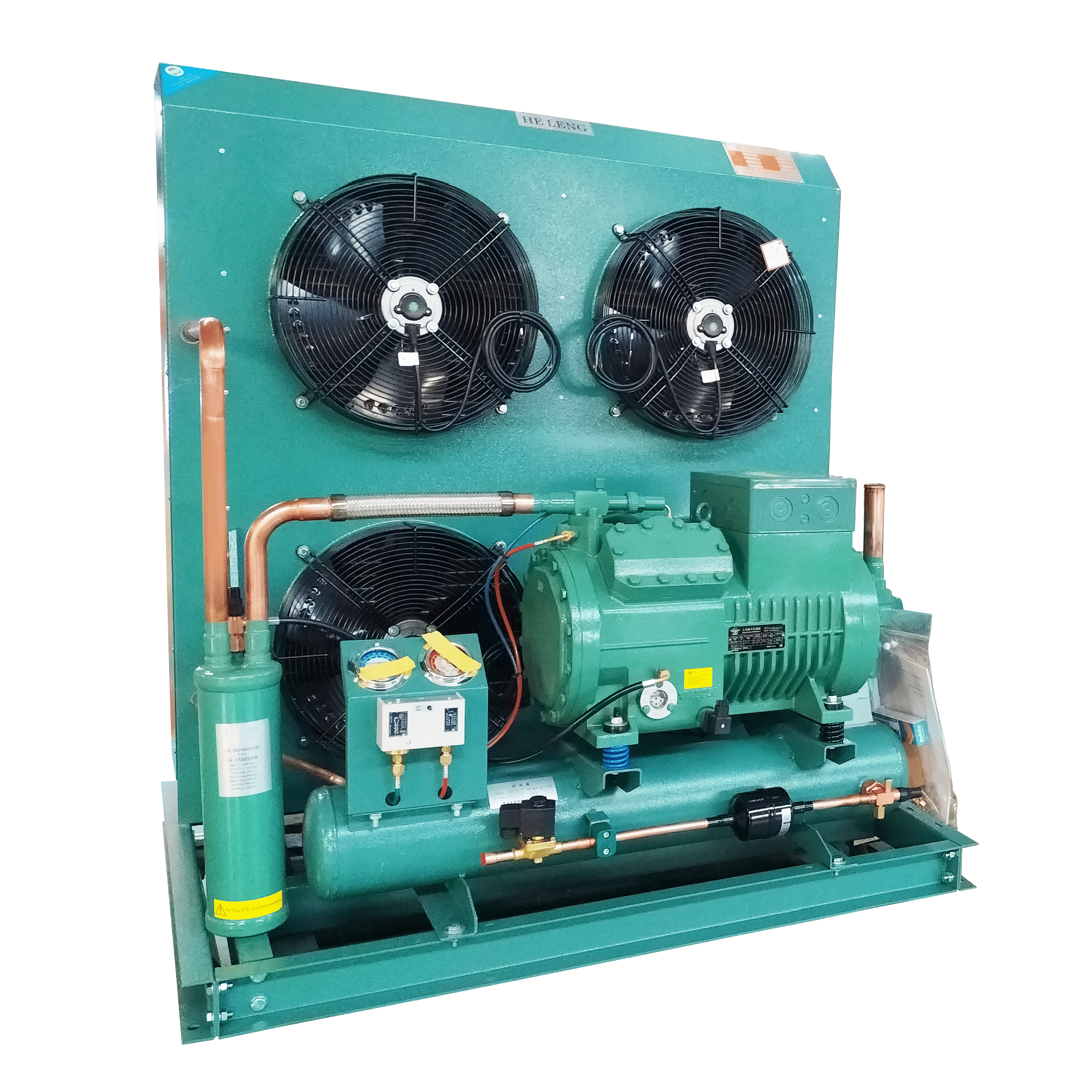
A semi hermetic reciprocating compressor encloses the motor and the compression mechanism within a heavy cast-iron housing. Instead of permanent welds, this housing utilizes heavy-duty bolted joints and specialized gaskets to seal the system. This engineering approach keeps the internal components fully protected from environmental contamination while maintaining total accessibility. The cast-iron construction provides immense structural rigidity, allowing the compressor to handle extreme internal pressures and heavy mechanical loads without casing deflection.
The defining feature of the semi-hermetic architecture is serviceability. Technicians can unbolt the casing to access critical internal components. Cylinder heads, valve plates, connecting rods, pistons, and stators can be easily reached for routine inspection. When components wear down through normal operation, they can be swapped out individually. This modularity allows the core housing to remain in service indefinitely, provided the maintenance schedule is strictly followed. Field technicians routinely perform megger testing on the stators and visually inspect the valve reeds for stress fractures, replacing only what is necessary.
Reciprocating mechanics operate by drawing refrigerant gas into a cylinder and compressing it using a piston driven by a crankshaft. This fundamental mechanical process occurs inside both hermetic and semi-hermetic enclosures. The piston moves downward to pull low-pressure gas through the suction valve, and then moves upward to compress the gas and push it out through the discharge valve. The precision of the piston rings and the seating of the valve reeds determine the overall efficiency of the compression cycle.
The critical difference lies in volumetric displacement and heavy-load capability. A Piston Compressor Unit housed in a semi-hermetic casing typically achieves significantly higher displacement volumes. Industrial reciprocating designs easily exceed 6.0 cubic meters per hour, whereas equivalent hermetic scroll or rotary compressors often remain below 3.0 cubic meters per hour. This massive difference in volumetric efficiency makes reciprocating designs superior for managing heavy, fluctuating cooling loads in large-scale facilities. The larger bore and stroke dimensions available in semi-hermetic castings allow for massive refrigerant vapor movement per crankshaft revolution.
Selecting the right compressor requires mapping the equipment's capabilities directly to the facility's operational demands. Engineers must assess cooling load variability, ambient temperature extremes, and required duty cycles. A facility experiencing massive swings in cooling demand requires a compressor capable of advanced modulation. Systems operating in extreme ambient temperatures need robust thermal management to prevent motor overheating. You must evaluate the specific refrigerant glide and discharge temperatures expected in your application to ensure the compressor casing can handle the thermal stress.
Facility maintenance capabilities play a massive role in this decision. Operating semi-hermetic equipment demands access to highly skilled, specialized technicians. These professionals must understand torque sequencing, internal clearance measurements, and advanced diagnostic procedures for on-site rebuilds. They need to know how to properly align a valve plate and torque the head bolts in a star pattern to prevent gasket blowouts. Conversely, hermetic systems require basic HVAC skills. Replacing a hermetic unit involves recovering the refrigerant, cutting the lines, brazing in a new unit, and recharging the system—a standard procedure for general technicians.
Downtime tolerance ultimately dictates the success criteria. In mission-critical environments like cold storage warehouses, pharmaceutical processing plants, or large supermarkets, system failure leads to immediate product loss. Engineers must calculate the operational impact of downtime using a structured approach.
Identify the maximum allowable temperature rise time for the specific stored product before spoilage occurs.
Calculate the financial value of the inventory at risk within the affected cooling zone.
Determine the average lead time required to source a replacement hermetic compressor versus the time required to stock and install semi-hermetic rebuild components.
Assess the availability of local emergency HVACR contractors capable of performing heavy brazing and system evacuation on short notice.
Compare the total risk value against the initial capital required to install redundant systems or repairable compressor architectures.
Hermetic compressors operate strictly on a run-to-failure model. Because internal maintenance is impossible, lifecycle planning relies entirely on predictive replacement or emergency logistics. When a hermetic unit fails, the entire compressor must be removed and discarded. This requires complete refrigerant evacuation, cutting the copper piping, brazing a new unit into place, replacing filter driers, pulling a deep vacuum, and recharging the system. This process is highly disruptive, requires significant logistical coordination, and introduces the risk of oxidation inside the copper lines if nitrogen purging is not executed perfectly during brazing.
Semi-hermetic compressors support comprehensive preventative maintenance. Technicians can perform internal inspections to gauge wear on pistons and cylinders before a failure occurs. Specific maintenance tasks include valve plate replacements, motor rewinding, and oil pump servicing. By replacing wearing parts proactively, the core compressor block can operate for decades. This approach shifts the maintenance strategy from reactive emergency replacement to scheduled, controlled servicing. You can schedule a valve plate swap during a low-load period, ensuring the system remains at peak volumetric efficiency without ever taking the main block offline.
Displacement capabilities and volumetric efficiency vary wildly between the two architectures. Hermetic units are optimized for lower capacities and steady-state loads. They are highly efficient within their specific design parameters but struggle to scale up for massive industrial requirements. When a facility needs massive cooling power, relying on dozens of small hermetic units creates a piping nightmare and multiplies the potential points of failure across the refrigeration network.
A semi hermetic reciprocating compressor scales exceptionally well for multi-compressor rack systems. In commercial refrigeration, multiple semi-hermetic units are often piped together in parallel on a single rack, sharing a common suction header and oil management system. This configuration offers superior power and load handling. As cooling demands fluctuate throughout the day, the rack controller can cycle individual compressors on or off, matching the capacity perfectly to the load. The robust internal components of reciprocating designs handle these frequent cycling demands without premature wear.
Both designs frequently utilize suction-gas-cooled motors. The cool, low-pressure refrigerant gas returning from the evaporator is routed directly over the motor windings before entering the compression cylinders. This method effectively removes heat from the electrical components, preventing insulation breakdown. The velocity of the suction gas is carefully engineered to ensure adequate cooling even during part-load operation.
However, the casing materials drastically alter heat dissipation under high-load conditions. The heavy cast-iron body of a semi-hermetic unit acts as a massive heat sink. It absorbs and dissipates thermal energy highly effectively, keeping internal temperatures stable even during extreme duty cycles. Hermetic units utilize thin steel shells. While lighter, these shells do not dissipate heat as effectively. Under sustained heavy loads or high ambient temperatures, hermetic units are more susceptible to thermal overload, which can degrade the motor winding insulation and lead to a short circuit.
Refrigerant transition readiness is a critical evaluation metric. The industry is rapidly shifting toward low-GWP (Global Warming Potential) refrigerants, including A2Ls, CO2 (R-744), and Ammonia (R-717). Semi-hermetic designs adapt well to these transitions. Manufacturers can upgrade internal seals, gaskets, and valve plates to handle the higher pressures and different chemical properties of modern refrigerants. For example, transitioning a system to CO2 requires compressors capable of handling extreme transcritical pressures, a task perfectly suited for heavy cast-iron semi-hermetic blocks.
Environmental risk profiles also differ. Welded hermetic shells are inherently leak-proof, offering zero risk of refrigerant escaping through casing seams. Bolted semi-hermetic designs rely on gasket integrity. If a technician fails to torque the bolts correctly after servicing, or if a gasket degrades over time due to thermal cycling, refrigerant can leak into the atmosphere. Strict adherence to maintenance protocols, including the use of OEM-specified gasket materials and calibrated torque wrenches, is required to mitigate this environmental risk.
Compressor Architecture Comparison
Evaluation Dimension | Hermetic Compressor | Semi-Hermetic Reciprocating Compressor |
|---|---|---|
Casing Construction | Welded thin steel shell | Bolted heavy cast-iron housing |
Internal Access | Completely inaccessible | Fully accessible via bolted panels |
Maintenance Strategy | Run-to-failure / Full replacement | Preventative maintenance / Component rebuilds |
Capacity Range | Low to medium capacity | Medium to ultra-high industrial capacity |
Heat Dissipation | Limited by thin steel shell | Excellent thermal mass via cast iron |
Leak Risk (Casing) | Zero (welded seams) | Low to Moderate (depends on gasket integrity) |
The manufacturing processes behind these two architectures dictate their initial resource requirements. Hermetic compressors benefit from mass-produced economy. The automated welding of steel shells and standardized internal components streamline production. This makes them highly accessible for standardized HVAC and light refrigeration projects where initial capital expenditure is tightly constrained. The lightweight nature of the steel shell also reduces shipping and rigging requirements during the initial installation phase.
Semi-hermetic engineering requires premium manufacturing techniques. The process involves complex cast-iron pouring, precision CNC machining of mating surfaces, and the manual assembly of bolted joints and gaskets. This rigorous manufacturing standard demands a higher initial resource allocation but results in a significantly more robust piece of machinery designed for decades of continuous operation. The heavy cast-iron blocks require specialized lifting equipment and reinforced mounting pads during installation, adding to the initial setup complexity.
Evaluating long-term operational impact requires comparing the logistics of rebuilding versus replacing. When a hermetic unit fails, the entire system is paralyzed until a replacement is sourced, delivered, and installed. The logistics include managing refrigerant recovery, handling the disposal of the failed unit, and executing complex brazing work in the field. If the failure involves a motor burnout, the entire piping network must be flushed to remove acidic oil, adding hours of labor to the replacement process.
Conversely, maintaining a semi-hermetic unit involves scheduled downtime. Facility managers can order rebuild kits—containing new gaskets, valve reeds, and piston rings—well in advance. Specialized labor performs the rebuild on-site, often without needing to remove the main compressor block from the piping network. This targeted maintenance drastically extends the equipment's lifespan and minimizes unexpected operational paralysis. Routine oil changes and oil analysis can predict internal wear, allowing maintenance teams to schedule a bearing replacement before a catastrophic failure damages the crankshaft.
Part-load performance is a critical factor in modern refrigeration. Systems rarely operate at 100% capacity at all times. A Piston Compressor Unit in a semi-hermetic casing supports advanced capacity modulation far better than basic hermetic models. Efficient modulation prevents short-cycling, which draws massive starting currents and degrades electrical contactors.
Engineers can equip semi-hermetic units with cylinder unloaders. These mechanical devices hold the suction valves open on specific cylinders, effectively deactivating them when cooling demand drops. The piston continues to move, but no compression occurs, reducing power consumption instantly. Additionally, semi-hermetic motors are frequently designed for strict compatibility with Variable Frequency Drives (VFDs). This allows the system to ramp motor speed up or down in precise alignment with the required cooling load, typically operating safely between 30Hz and 60Hz without compromising oil return to the crankcase.
The primary risk associated with hermetic architecture is catastrophic internal failure. If the internal motor burns out, the resulting electrical arc superheats the refrigerant and oil. This chemical reaction creates highly corrosive acids. Because the unit cannot be opened and cleaned, this acid is pumped through the entire refrigeration loop, contaminating the piping, expansion valves, and evaporator coils. A severe burnout requires the installation of specialized suction line filter driers and multiple oil changes on the replacement compressor to fully neutralize the system.
To mitigate this risk, engineers must implement strict power quality monitoring to prevent voltage spikes or phase imbalances from damaging the motor. Installing high-capacity, acid-catching filter driers on both the liquid and suction lines is mandatory to protect the wider system from contamination. Furthermore, designing the facility with N+1 redundancy ensures that if one hermetic unit suffers a catastrophic failure, a backup system immediately takes over the cooling load while the lengthy replacement process takes place.
The accessibility of semi-hermetic designs introduces specific operational risks. Gasket degradation over time can lead to micro-leaks. Improper torqueing of the casing bolts during field service warps the mating surfaces, guaranteeing a blowout under high discharge pressures. Additionally, opening the system for internal repairs exposes the internal oil and components to ambient moisture and airborne debris. POE (polyolester) oils used with modern refrigerants are highly hygroscopic and will absorb moisture rapidly if the crankcase is left open to the atmosphere.
Mitigation relies entirely on procedural discipline. Facility managers must mandate strict adherence to OEM torque specifications and sequencing patterns when reassembling the casing. Regular oil analysis should be conducted to detect moisture ingress or abnormal metal wear before it causes a failure. Finally, facilities must utilize only certified commercial HVACR technicians who possess specific training in internal compressor servicing and understand the critical importance of pulling a deep micron vacuum after reassembly.
Hermetic units dominate applications where space is limited and replacement logistics are straightforward. They are the standard choice for light commercial HVAC systems, rooftop units (RTUs), and small split systems. In the food service sector, reach-in coolers, under-counter freezers, and vending machines rely exclusively on hermetic compressors. In these scenarios, the equipment footprint is too small to accommodate a cast-iron block, and swapping out a standardized welded unit is faster and more practical than attempting an internal repair. The lower initial resource requirement aligns perfectly with the operational budgets of small retail and food service operations.
Heavy industrial and large-scale commercial environments require the durability of semi-hermetic engineering. Supermarket refrigeration racks depend on these units to handle massive, fluctuating loads across hundreds of display cases. Industrial liquid chillers, blast freezers, and specialized pharmaceutical process cooling systems utilize semi-hermetic technology because high capacity, massive volumetric displacement, and equipment longevity are non-negotiable requirements. When the cooling process protects millions of dollars in inventory, the ability to rebuild and maintain the compressor on-site is an absolute necessity. The robust cast-iron construction easily handles the continuous duty cycles required in meat processing plants and large-scale cold storage distribution centers.
Audit your facility's current and projected cooling loads to determine exact volumetric displacement requirements.
Evaluate the historical operational impact of compressor failures to establish your facility's true downtime tolerance.
Map the physical footprint of your mechanical rooms to ensure adequate clearance for on-site compressor rebuilding and maintenance.
Consult with an industrial refrigeration engineer to match compressor modulation capabilities with your specific load profiles.
A: No. Hermetic compressors are housed in a permanently welded steel shell. If the internal motor burns out or a mechanical component fails, the entire compressor unit must be removed, discarded, and replaced with a new one. Internal access is impossible without destroying the casing.
A: With strict adherence to preventative maintenance schedules, a semi-hermetic compressor can operate for decades. Because wearing components like valve plates, pistons, and bearings can be replaced individually, the core cast-iron block remains functional indefinitely.
A: The primary advantage is massive volumetric displacement and heavy-load handling. Reciprocating piston designs can move significantly larger volumes of refrigerant gas per hour compared to scroll designs, making them far superior for large-scale industrial cooling and rapid temperature pull-downs.
A: Yes, slightly. Hermetic models have welded seams, offering zero casing leak risk. Semi-hermetic models use bolted joints and gaskets. If these gaskets degrade or if bolts are improperly torqued during maintenance, refrigerant can leak. Proper servicing mitigates this risk entirely.
A: Retrofitting is technically possible but highly complex. It requires significant piping modifications, electrical system upgrades to handle different starting currents, and physical space adjustments, as semi-hermetic units are much larger and heavier than hermetic equivalents.
A: Yes. Both architectures completely isolate the internal motor and compression mechanics from the outside environment. This eliminates the shaft seal leakage and contamination issues that frequently plague older open-drive compressor designs.