Views: 0 Author: Site Editor Publish Time: 2026-08-19 Origin: Site

Compressor failure in commercial HVAC and industrial refrigeration leads to catastrophic downtime. Product loss occurs rapidly. Replacement costs escalate. Facility managers face a constant tension when specifying equipment. They must choose between low-cost, disposable fully hermetic compressors and highly serviceable but leak-prone open-drive systems. Finding the right balance dictates long-term operational stability.
The semi hermetic reciprocating compressor serves as the ideal middle-design engineering solution. It bridges the gap between welded hermetic units and complex open-drive configurations. This guide deconstructs its working principles, lifecycle expenses, and technical evaluation criteria. You will understand exactly how to determine if this compressor architecture is the optimal specification for your facility.
Design Compromise: A semi hermetic reciprocating compressor houses both the motor and compressor within a single large cast-metal shell, sealed with gasketed covers, screws, and bolted joints to allow for field inspection and rebuilding.
Operational Mechanism: It utilizes a crankshaft-driven piston assembly moving up and down within cylinders to compress low-pressure refrigerant gas into high-pressure, high-temperature gas.
Primary Advantage: Unlike fully welded hermetic units, a semi hermetic compressor unit can be opened for diagnosis, periodic maintenance, valve plate replacement, and motor rewinding, significantly extending its operational lifespan.
Ideal Application: Best suited for medium-to-large commercial refrigeration, supermarkets, and industrial cooling applications where capacity modulation and long-term serviceability outweigh higher initial capital expenditures.
Compressor housing design dictates serviceability in the field. A fully hermetic compressor features a welded steel shell. You cannot open it. When an internal component fails, mechanics must cut the refrigerant lines, recover the charge, and discard the entire unit. A semi-hermetic model uses a heavy cast-iron or cast-aluminum housing. Engineers secure this housing with heavy-duty bolts and thick gasketed covers. Technicians can unbolt these covers to access internal components directly on the job site.
This design eliminates a major vulnerability found in open-drive compressors. Open-drive units separate the motor from the compressor block. A physical shaft connects them, requiring a mechanical shaft seal to keep refrigerant inside the block. Shaft seals wear down and frequently leak refrigerant. By housing the electric motor and the compressor mechanics in the same bolted casing, the semi-hermetic design completely eliminates the need for a shaft seal. This retains the leak-resistant nature of a hermetic unit while preserving full mechanical serviceability.
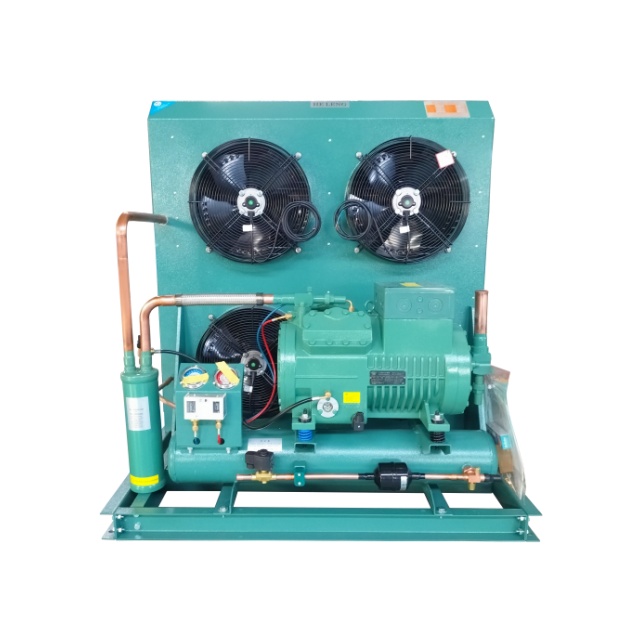
The internal architecture of a Semi Hermetic Compressor Unit mirrors heavy-duty automotive engines. The components are built for continuous, high-stress operation.
Electric Motor: Consists of a stationary stator pressed into the housing and a rotating rotor connected directly to the crankshaft.
Crankshaft and Rods: The heavy forged steel crankshaft connects to aluminum or cast-iron connecting rods, translating rotary motion into linear motion.
Pistons and Cylinders: Machined pistons ride inside precision-honed cylinders to compress the refrigerant gas.
Valve Plate Assembly: Sits at the top of the cylinders, housing the suction and discharge reeds that control the directional flow of gas.
Oil Pump: Driven by the crankshaft, this pump forces lubrication through drilled passages to the main bearings and rod journals.
External access points allow technicians to monitor and maintain the system without tearing it down. Service valves isolate the compressor from the main refrigeration loop, allowing mechanics to pump down the unit. Oil sight glasses provide visual confirmation of lubrication levels and oil clarity. Crankcase heaters wrap around or insert into the oil sump to prevent refrigerant from migrating into the oil during off-cycles. Heavy-duty screws and bolts secure the gasketed access plates, ensuring a tight seal against high internal operating pressures.
The process begins at the suction service valve. Low-pressure, low-temperature refrigerant gas enters the compressor housing from the evaporator. In many semi-hermetic designs, this cool suction gas routes directly over the motor windings before reaching the cylinders. The gas absorbs heat generated by the electrical motor. This cools the stator and slightly superheats the gas, ensuring that no liquid refrigerant enters the compression chambers.
After cooling the motor, the gas moves into the suction plenum located in the cylinder head. It waits directly above the intake valves. The compressor draws this gas into the cylinders, compresses it, and forces it out through the discharge plenum as a high-pressure, high-temperature gas. This hot discharge gas then travels down the discharge line to the condenser, where it rejects heat to the ambient air or water loop.
The electric motor drives the crankshaft, creating high-speed rotary motion. The connecting rods convert this rotary motion into linear, up-and-down movement. The pistons execute this reciprocating action within the cylinders, driving the entire refrigeration cycle.
During the downstroke, the piston moves away from the valve plate. This increases the volume inside the cylinder, creating a low-pressure area. The pressure differential between the suction plenum and the cylinder forces the suction valve open. Low-pressure gas floods into the cylinder. During the upstroke, the piston reverses direction. The cylinder volume decreases, causing internal pressure to rise rapidly. This pressure snaps the suction valve shut. The piston continues upward, compressing the trapped gas. Once cylinder pressure exceeds the pressure in the discharge line, the discharge valve forces open. The piston pushes the compressed gas out of the cylinder.
Table: Reciprocating Compression Phases
Phase | Piston Direction | Cylinder Pressure | Suction Valve State | Discharge Valve State |
|---|---|---|---|---|
Intake (Downstroke) | Downward | Decreasing (Below Suction Line) | Open | Closed |
Compression (Upstroke) | Upward | Increasing Rapidly | Closed | Closed |
Discharge (Top of Stroke) | Upward | Peak (Above Discharge Line) | Closed | Open |
Industrial applications require substantial cooling capacity. Manufacturers build semi-hermetic compressors with multiple cylinders to meet this demand. Common configurations include 2, 4, 6, or 8-cylinder models. A 6-cylinder model handles significantly higher volumes of refrigerant gas than a 2-cylinder model, making it suitable for large supermarket racks or cold storage warehouses.
The crankshaft design staggers the piston strokes. While one piston executes a suction stroke, another performs a compression stroke. This staggered dynamic ensures smooth, continuous operation. It minimizes mechanical vibration and provides a steady flow of high-pressure discharge gas, preventing severe pulsations in the discharge line. Multi-cylinder banks also allow for precise capacity control, matching compressor output to the immediate cooling load.
The valve plate separates the cylinder from the suction and discharge plenums in the cylinder head. It contains precision-machined reed valves or ring valves. These valves operate entirely on pressure differentials. They do not use mechanical springs, camshafts, or electronic actuators.
When cylinder pressure drops below suction pressure, the suction reed flexes open. When cylinder pressure rises, the suction reed snaps shut against the valve plate. As compression continues, cylinder pressure eventually overcomes discharge pressure. The discharge reed flexes open, releasing the gas. These valves must seat perfectly. Any debris, carbon buildup, or metal fatigue prevents a tight seal, causing high-pressure gas to leak back into the cylinder during the downstroke. This destroys compressor volumetric efficiency and causes the unit to run excessively hot.
Selecting the right compressor requires defining baseline operational requirements. You must calculate the required cooling load in tonnage. Evaluate the ambient operating conditions. High ambient temperatures demand robust motor cooling and specific refrigerant selections. Determine your acceptable downtime thresholds. Facilities processing perishable goods or operating pharmaceutical cold rooms cannot tolerate extended outages.
Assess your target lifespan and the capabilities of your on-site engineering team. If your technicians lack the training to perform mechanical rebuilds, a highly serviceable compressor loses its primary advantage. Success requires aligning the equipment's capabilities with your facility's maintenance infrastructure. You need mechanics who know how to handle a torque wrench, scrape gaskets, and read a micrometer.
Evaluating financial viability requires looking beyond the initial purchase price. A semi hermetic compressor unit requires a higher upfront capital expenditure than a fully hermetic model. The heavy cast housing, machined access points, and complex internal oil pumps drive up manufacturing costs.
However, operational expenditure over a 10 to 15-year horizon tells a different story. When a hermetic unit fails, you buy a completely new compressor. You pay for full replacement labor, crane rigging, and refrigerant recovery. When a semi-hermetic unit suffers a valve failure, technicians install a rebuild kit. You replace the damaged valve plate, install new gaskets, and restore operation at a fraction of the cost. This repairability significantly lowers long-term expenses and keeps the original iron block in service for decades.
Cooling loads fluctuate based on ambient weather, product loading, and production schedules. Running a compressor at full capacity during low-load conditions wastes massive amounts of energy and causes short-cycling, which burns out motors. Reciprocating designs offer inherent capacity modulation through cylinder unloading.
Cylinder unloaders use solenoid valves to block suction gas from entering specific cylinders. On a 6-cylinder compressor, unloaders can deactivate two cylinders. The compressor now operates at 67% capacity. The pistons still move up and down, but they do not compress any gas. This matches the cooling output to the actual load. Furthermore, modern semi-hermetic units integrate seamlessly with Variable Frequency Drives (VFDs). VFDs alter the electrical frequency supplied to the motor, changing its RPM. This provides precise load matching and maximizes energy efficiency across varying conditions.
Table: Compressor Technology Comparison
Compressor Type | Housing Design | Serviceability | Primary Vulnerability | Ideal Application |
|---|---|---|---|---|
Fully Hermetic | Welded Steel Shell | None (Disposable) | Internal component failure requires full replacement | Small commercial, residential HVAC |
Semi-Hermetic | Bolted Cast Metal | High (Field Repairable) | Gasket leaks if improperly torqued | Medium-to-large commercial, supermarkets |
Open Drive | Separate Motor & Compressor | Very High | Shaft seal refrigerant leaks | Industrial ammonia systems, engine-driven units |
The trade-off centers on serviceability versus initial cost and physical footprint. Fully hermetic units cost less upfront. They occupy less space and weigh significantly less, making them easy to install on light-duty rooftops. However, they are throwaway items. A burnt motor winding or a shattered valve reed means the entire unit goes to the scrap yard.
Semi-hermetic models demand more physical space. They weigh hundreds of pounds, requiring proper rigging. Yet, they offer complete internal access. You can replace the stator, swap pistons, and clean the oil sump. This mitigates the risk of catastrophic replacement costs upon internal failure. For a supermarket rack system, this repairability is non-negotiable.
Open drive compressors offer ultimate flexibility. You can drive them with an electric motor, a diesel engine, or a steam turbine. This makes them vital for specific industrial applications, marine refrigeration, and large ammonia plants. However, the mechanical shaft seal remains a constant maintenance headache. It will eventually leak, requiring specialized replacement.
Semi-hermetic units eliminate the shaft seal entirely. The motor and compressor share the same sealed environment. You lose the ability to use non-electric prime movers, but you gain a drastically more leak-resistant system. This makes them the standard for commercial halocarbon and CO2 refrigeration systems.
Different compression technologies serve different load profiles. Scroll compressors excel in smaller, continuous load applications. They operate quietly and efficiently but lack field serviceability. Screw compressors dominate massive industrial loads. They handle massive volumes of refrigerant but require complex oil management systems and separators.
Reciprocating technology fits perfectly in the middle. It handles highly variable, medium-to-large loads. The ability to utilize cylinder unloading gives reciprocating compressors a distinct advantage in applications requiring robust, stepped capacity modulation. They handle the rapid load changes of a blast freezer or a grocery store display case better than most alternatives.
The bolted design introduces a specific vulnerability: reliance on gaskets. Every access plate, valve cover, and service port requires a gasket to seal high-pressure refrigerant. Over time, mechanical vibration and thermal cycling degrade these materials, leading to micro-leaks.
Mitigation requires strict adherence to manufacturer specifications. Technicians must use calibrated torque wrenches when tightening bolts. Uneven torque warps access plates and crushes gaskets, guaranteeing a leak. Mechanics must follow a star-pattern torque sequence. Routine leak testing using electronic sniffers or ultrasonic detectors remains mandatory. During rebuilds, technicians must thoroughly clean mating surfaces with a wire brush and scraper to ensure proper gasket seating.
Reciprocating systems rely heavily on proper lubrication. Most semi-hermetic units utilize a reversible gear-type oil pump driven directly off the end of the crankshaft. This pump draws oil through a pickup tube and a fine mesh screen in the crankcase sump. It forces the oil through drilled passages within the crankshaft itself. This pressurized oil lubricates the main bearings, connecting rod journals, and wrist pins. Maintaining correct crankcase pressure ensures consistent oil flow.
Liquid slugging poses the greatest threat to this system. If liquid refrigerant enters the compressor, it washes oil off the cylinder walls. It dilutes the oil in the crankcase, destroying its lubricating properties. Liquid is also incompressible; attempting to compress it will shatter valve plates and bend connecting rods. Crankcase heaters mitigate oil dilution by boiling off liquid refrigerant during off-cycles, keeping the oil pure and ready for startup.
Maximizing the lifespan of a semi hermetic compressor unit requires proactive diagnostics. Technicians use megohmmeters to test motor winding insulation. Degrading insulation precedes a catastrophic motor burnout. Pressure differential checks across the cylinders reveal worn or cracked valve reeds. If the compressor cannot pull a deep vacuum on itself, the valves are failing.
Oil acidity tests detect moisture contamination. Acidic oil eats away at motor insulation and copper piping, leading to copper plating on the crankshaft journals. A baseline periodic maintenance schedule keeps the unit running efficiently.
Table: Compressor Maintenance Schedule
Frequency | Maintenance Task | Purpose |
|---|---|---|
Monthly | Check oil level in sight glass | Ensure adequate lubrication for bearings |
Quarterly | Perform electronic leak check on all gaskets | Prevent refrigerant loss and environmental fines |
Annually | Pull oil sample for acid and moisture analysis | Prevent internal corrosion and motor burnout |
Annually | Megger test motor windings | Track insulation degradation over time |
When a failure occurs, facility managers must assess the operational reality. They must balance the cost of downtime during an on-site field rebuild against the speed of swapping in a pre-remanufactured unit. Rebuilding a valve plate takes a few hours. Replacing a burnt stator takes a full day and requires specialized extraction tools.
The semi hermetic reciprocating compressor stands as the definitive choice for applications demanding high reliability, variable capacity, and long-term serviceability. It provides the leak resistance of a hermetic shell while offering the mechanical access of an open-drive system. Success depends entirely on the facility's ability to support periodic mechanical maintenance and employ skilled technicians.
Take the following steps to finalize your equipment specification:
Audit your current cooling load requirements to determine the exact tonnage needed for peak summer conditions.
Evaluate your mechanical room footprint to ensure adequate space for rigging and unbolting compressor access panels.
Consult a refrigeration engineer to match the compressor's cylinder unloading capabilities with your facility's load fluctuations.
Review manufacturer performance curves to verify efficiency ratings with your specific refrigerant and operating temperatures.
A: A fully hermetic compressor features a welded steel shell that cannot be opened. If an internal part fails, the entire unit must be replaced. A semi-hermetic compressor uses a heavy cast-metal casing secured with bolts and gasketed covers. This design allows technicians to open the unit for inspection, maintenance, and internal repairs directly in the field.
A: A well-maintained unit typically lasts 10 to 15 years before requiring a major overhaul. Unlike hermetic units, periodic maintenance and field rebuilds—such as replacing valve plates, swapping oil pumps, or rewinding the motor—can extend this lifespan indefinitely, making it a highly durable long-term investment.
A: Yes. Technicians can isolate the compressor, remove the heavy-duty screws, and take off the gasketed covers. This provides direct access to replace damaged valve plates, swap out worn pistons, or repair the electrical stator without removing the entire compressor block from the mechanical room.
A: Common causes of failure include liquid slugging (liquid refrigerant entering the cylinders), loss of lubrication due to oil leaks or dilution, electrical surges damaging motor windings, and severe overheating caused by inadequate airflow, dirty condensers, or high discharge temperatures.
A: A 6-cylinder model handles significantly larger volumes of refrigerant gas to meet higher capacity requirements. The crankshaft staggers the piston strokes across the multi-cylinder bank, ensuring smoother operation and continuous high-pressure output. It also utilizes cylinder unloading to deactivate specific cylinders, improving efficiency during low-load conditions.
A: Compatibility depends on the specific compressor model and the type of oil in the crankcase. Modern units are designed to work with traditional HFCs, newer low-GWP HFO blends, and natural refrigerants like CO2. You must verify manufacturer specifications and oil compatibility before introducing any refrigerant into the system.